

The Complete Guide to Reactive Dogs: Causes, Signs, and What You Can Do
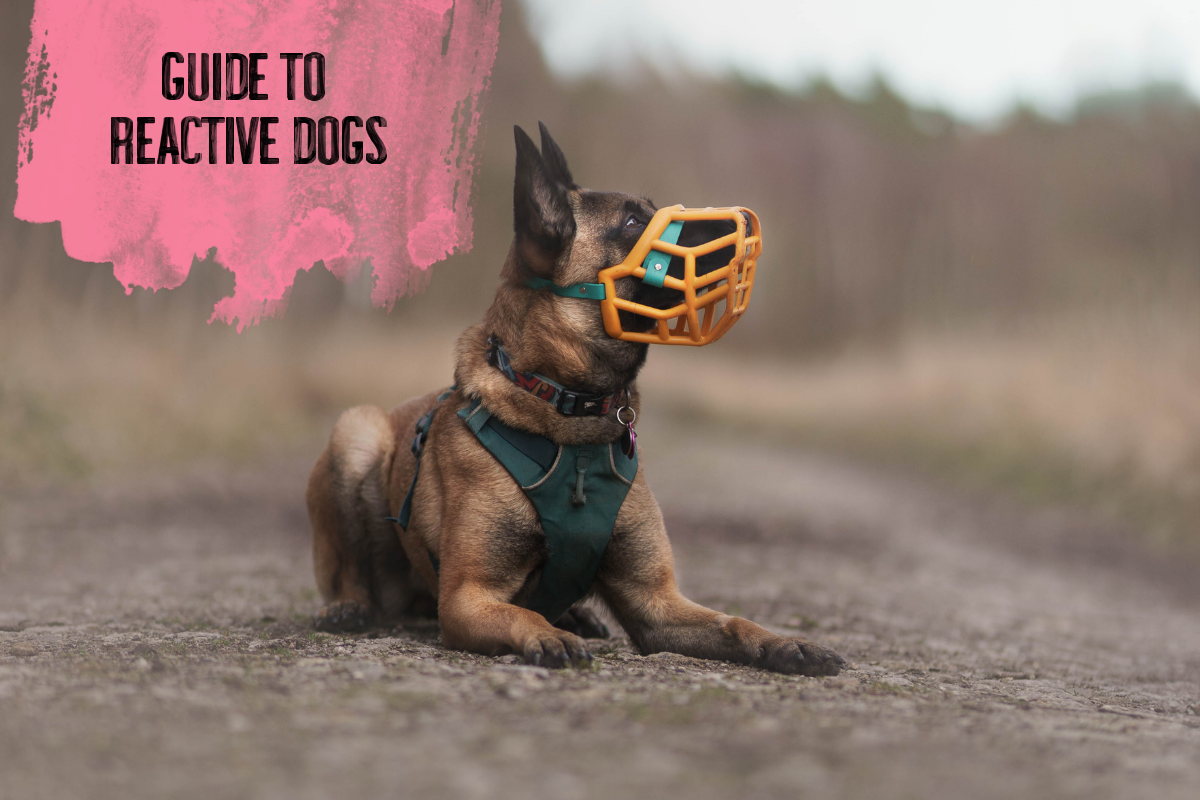
Reactive dogs are not “bad” dogs. Reactivity is usually an emotional response to something the dog finds overwhelming, frustrating, or threatening, and it often shows up most clearly on walks or around triggers like other dogs, people, or vehicles. Research in canine behaviour consistently shows that many problem behaviours are rooted in underlying emotional states such as fear or frustration rather than intentional disobedience (Overall, 2013; Casey et al., 2014).
What reactive dogs are
A reactive dog is a dog that responds very strongly to a trigger, often with barking, lunging, growling, freezing, or intense staring. That reaction can look dramatic from the outside, but it is usually the result of stress, fear, frustration, or over-arousal rather than deliberate disobedience (Horwitz & Mills, 2009).
Not every reactive dog is aggressive, and not every bark or lunge means a dog wants to fight. In many cases, the behaviour is a coping strategy that appears when the dog feels too close to a trigger and does not know how to create distance safely. Studies on canine aggression emphasise that distance-increasing signals are often misinterpreted as “aggression” when they are actually defensive behaviours (Shepherd, 2002).
For dog owners, that distinction matters. When you understand that reactivity is communication, not stubbornness, it becomes much easier to respond in a way that supports you both.
Common signs of reactivity
Reactive dogs can show their stress in obvious ways, but they often give smaller warning signs first. Those early signs may include lip licking, yawning, sniffing the ground, turning the head away, hard staring, weight shifting, freezing, or becoming unusually still. These behaviours are widely recognised as “displacement” or “calming signals” in canine communication (Rugaas, 2006).
More obvious signs often follow if the dog is pushed past their comfort zone. These can include barking, whining, lunging, growling, spinning, pulling hard on the lead, or trying to escape.
Some dogs show “quiet” reactivity instead of loud outbursts. They may close their mouth, go rigid, stare, or seem shut down before the bigger reaction appears. That is why body language matters so much when reading a reactive dog.
Why dogs become reactive
There is usually no single cause. Reactivity can develop through a mix of genetics, early experience, learning history, pain, and repeated exposure to stressful situations. Behavioural research highlights that both inherited temperament and environmental influences contribute significantly to fear and aggression-related behaviours (van Rooy et al., 2014).
Some dogs are naturally more sensitive or quick to react, which may reflect inherited temperament differences. Others become reactive after frightening encounters, poor early socialisation, chronic stress, or repeated experiences where barking or lunging successfully made a trigger go away (Hiby et al., 2004).
Pain can also play a significant role. Veterinary guidance notes that behaviour changes, including increased reactivity, should always prompt consideration of medical causes as well as behavioural ones, and over 80% of problem behaviour seen in one study were attributed to underlying, unmanaged, pain (Mills et al., 2020).
Frustration can be another major factor. A dog who wants to reach another dog, greet a person, or chase movement may react strongly when the lead prevents them from getting there. This type of “barrier frustration” is discussed within behaviour science (Sherman & Mills, 2008).
Why it often happens on walks
Walks are one of the most common places where reactivity appears because the environment is busy, unpredictable, and hard for the dog to control. Other dogs, traffic, people, bikes, joggers, wildlife, and sudden noises can all push a sensitive dog over threshold.
Leads can make things worse because they reduce the dog’s ability to move away. For some dogs, that loss of choice turns concern into panic or frustration very quickly. Research suggests that restricted movement can increase stress-related behaviours in dogs (Yin, 2009).
This is also why “just keep walking” does not always work. If the dog is already overwhelmed, moving closer to the trigger or dragging them through it can increase stress rather than reduce it.
What you can do right now
The first goal is not perfection. It is helping your dog feel safer and preventing repeated stressful rehearsals of the behaviour. Every time a dog practises barking and lunging, the pattern can become easier to repeat both through reinforcement of the behaviour, and the reflex response is strengthened (Bouton, 2007).
Start by increasing distance from triggers whenever possible. Distance is often the fastest way to lower stress and give your dog enough space to think again.
Next, watch for early body language so you can act before the reaction escalates. If your dog starts scanning, freezing, or staring hard, that is your cue to calmly create space, not wait for barking.
For some dogs it helps to keep walks more predictable. Choose quieter routes, go out at calmer times of day, and avoid situations where your dog is likely to be surprised by close encounters in the early management and training stages of their reactivity journey.
Reinforce the behaviour you want more of, such as checking in with you, turning away from a trigger, or staying relaxed at a safe distance. Positive reinforcement is widely supported in the literature as an effective and welfare-friendly training method (Hiby et al., 2004).
What not to do
Do not punish growling, barking, or lunging. Those behaviours are useful warning signals, and suppressing them can hide the dog’s discomfort without solving the underlying issue. Suppression without emotional change has been linked to increased risk of escalated aggression (Herron et al., 2009). This is often when behaviour is described as being ‘out of the blue’.
Do not force greetings, insist on “saying hello,” or keep your dog in situations where they are experiencing significant stress. Reactivity usually gets worse when the dog feels they have a lack of control or viable options to cope with the situation.
Do not assume every reactive dog needs more exposure. More exposure is not the same as better training, especially if the dog is repeatedly getting too close to triggers without support.
When to seek help
If your dog’s behaviour is new, escalating, or severe, speak to a vet first to rule out pain or other medical issues. This step matters because physical discomfort can be an overlooked cause of behaviour change, and physical health and wellbeing are a key part of welfare and behaviour.
If the behaviour is longstanding or complex, look for a qualified behaviour professional who uses humane, evidence-based methods. Clinical behaviour work emphasises gradual desensitisation and counterconditioning rather than flooding (Overall, 2013).
You should also seek help sooner if your dog’s reactivity is causing daily stress, limiting walks, or making you avoid normal life activities. Support is not a sign of failure; it is often the most practical next step - and as an animal behaviour and training professional myself, I will seek support if I feel I need it for my own dogs or for training clients. For example approaching another professional who’s specialism is different to my own. Supporting a reactive dog is more effective with a village of support.
What this means for photography EXPERIENCES
For reactive dogs, the best photography experiences are usually carefully constructed, quiet, and dog-led. The goal is not to push for a perfect pose but to create an environment where your dog feels safe enough to settle and be themselves.
That might mean more time, more space, fewer people, a quieter location, and no pressure for direct eye contact or close handling. For many dogs, that kind of setup makes the experience far more successful than a traditional fast-paced shoot, and that is what I tailor for every dog.
If you are a dog owner reading this, a photographer who understands reactivity should talk to you about triggers, distance, safety, and pacing before the session even starts. They should also be willing to outline and discuss their experience, qualifications and suitability to support you and your dog. That conversation is often the clearest sign that your dog will be in good hands.
FAQs
Are reactive dogs aggressive?
Not necessarily. Reactivity is an outward response to a trigger, and it can be driven by fear, frustration, pain, or over-arousal rather than a desire to harm.
Can reactive dogs improve?
Yes, many reactive dogs can improve with the right mix of management, training, and support. The best progress usually comes from reducing stress, preventing rehearsals, and changing the dog’s emotional response over time.
Is reactivity my fault?
Usually not. Reactivity is typically a combination of temperament, experience, environment, and sometimes pain, rather than one mistake made by an owner.
Why is my dog worse on the lead?
A lead can remove choice and increase frustration or fear because the dog cannot easily create distance from the trigger.
Final thoughts
If your dog is reactive, they are not giving you a hard time; they are having a hard time. Once you start seeing the behaviour as communication, you can make better choices that reduce stress and help you and your dog feel safer.
For many owners, that shift is the beginning of calmer walks, more confidence, and a much better relationship with their dog.
Fear Reactivity vs Frustration Reactivity » Heather Woodward Photography Anxious Dog Photography
Why Dogs React More on the Lead » Heather Woodward Photography Anxious Dog Photography
REACTIVITY: Early Stress Signals Owners Miss » Heather Woodward Photography Anxious Dog Photography
Genetics vs Environment in Reactivity » Heather Woodward Photography Anxious Dog Photography
References
Bouton, M.E. (2007) Learning and Behavior: A Contemporary Synthesis. Sunderland, MA: Sinauer Associates.
Casey, R.A., Loftus, B., Bolster, C., Richards, G.J. and Blackwell, E.J. (2014) ‘Human directed aggression in domestic dogs (Canis familiaris): occurrence in different contexts and risk factors’, Applied Animal Behaviour Science, 152, pp. 52–63.
Herron, M.E., Shofer, F.S. and Reisner, I.R. (2009) ‘Survey of the use and outcome of confrontational and non-confrontational training methods in client-owned dogs showing undesired behaviors’, Applied Animal Behaviour Science, 117(1–2), pp. 47–54.
Hiby, E.F., Rooney, N.J. and Bradshaw, J.W.S. (2004) ‘Dog training methods: their use, effectiveness and interaction with behaviour and welfare’, Animal Welfare, 13(1), pp. 63–69.
Horwitz, D.F. and Mills, D.S. (2009) BSAVA Manual of Canine and Feline Behavioural Medicine. 2nd edn. Gloucester: BSAVA.
Mills, D.S., Demontigny-Bédard, I., Gruen, M., Klinck, M.P., McPeake, K.J., Barcelos, A.M., Hewison, L., Van Haevermaet, H., Denenberg, S. and Hauser, H. (2020) ‘Pain and problem behavior in cats and dogs’, Animals, 10(2), p. 318.
Overall, K.L. (2013) Manual of Clinical Behavioral Medicine for Dogs and Cats. St. Louis: Elsevier.
Rugaas, T. (2006) On Talking Terms with Dogs: Calming Signals. Wenatchee, WA: Dogwise Publishing.
Sherman, B.L. and Mills, D.S. (2008) ‘Canine anxieties and phobias: an update on separation anxiety and noise aversions’, Veterinary Clinics of North America: Small Animal Practice, 38(5), pp. 1081–1106.
van Rooy, D., Arnott, E.R., Early, J.B., McGreevy, P.D. and Wade, C.M. (2014) ‘Holding back the genes: limitations of research into canine behavioural genetics’, Canine Genetics and Epidemiology, 1(1), p. 7.
Yin, S. (2009) Low Stress Handling, Restraint and Behavior Modification of Dogs & Cats. Davis, CA: CattleDog Publishing.