

Fear vs Frustration Reactivity
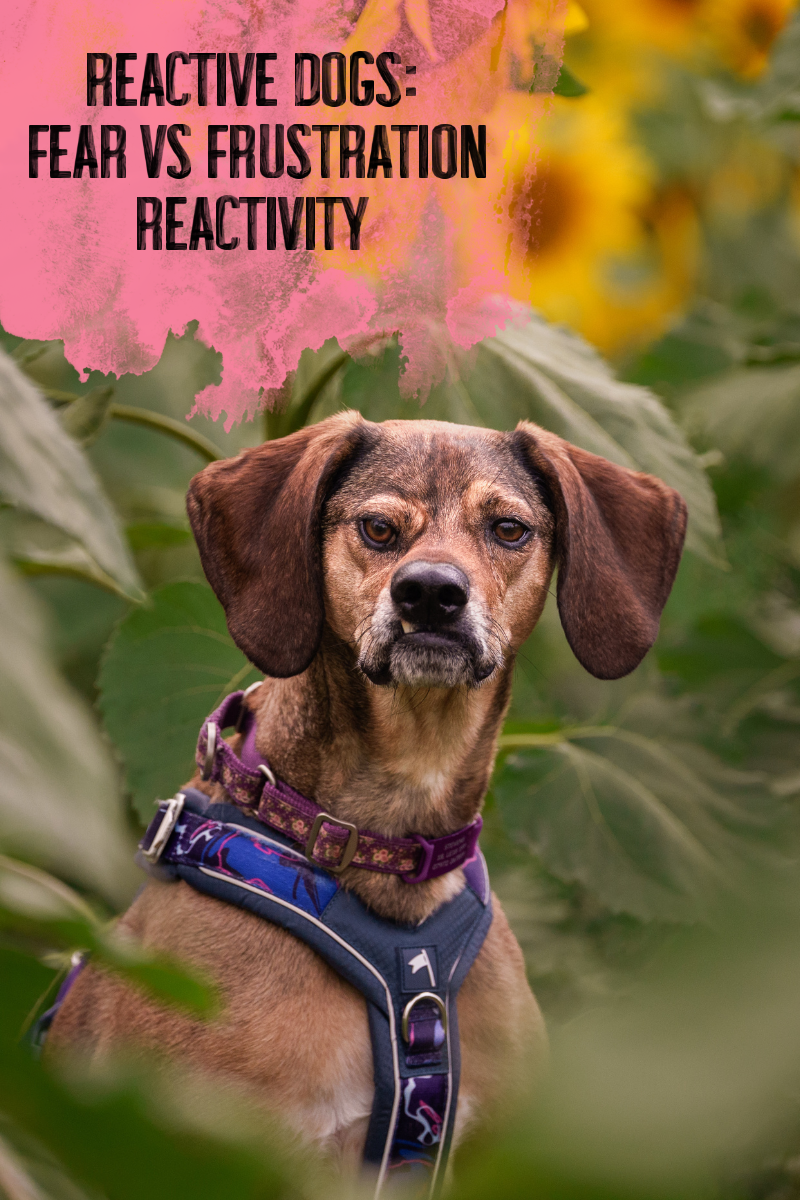
Reactive behaviour is not one single thing. Two dogs can bark and lunge for very different reasons: one because they are scared, and one because they are frustrated. In behavioural science, these are often described as defensive (fear-driven) versus appetitive or goal-blocked (frustration-driven) responses, and they are associated with different emotional and physiological states (Mills, 2005; Sherman & Mills, 2008).
Understanding the difference
Fear reactivity happens when a dog feels unsafe and wants more distance from the trigger. Frustration reactivity happens when a dog wants access to the trigger but cannot reach it, so the blocked energy comes out as barking, lunging, or pulling.
This difference matters because the underlying emotional state determines what will actually help. A fearful dog benefits from reduced exposure intensity, predictable environments, and gradual confidence-building. A frustrated dog, by contrast, often needs help with impulse control, emotional regulation, and learning alternative behaviours when access is denied.
Neurobiologically, fear responses are linked to threat-processing systems, while frustration is associated with reward-pathways and increased arousal when expected outcomes are prevented (Panksepp, 1998).
What fear reactivity looks like
A fearful dog often tries to retreat, freeze, avoid eye contact, or create distance. You may see low body posture, tucked tail, tense muscles, ears back, or sudden barking when the trigger gets too close.
These behaviours align with defensive strategies observed in stress research, where animals attempt to increase distance from perceived threats (Beerda et al., 1998). In many cases, the barking or lunging is a last resort after earlier, subtler signals have failed.
Fear reactivity is usually about self-protection. The dog is not trying to dominate the situation; they are trying to make the scary thing go away.
What frustration reactivity looks like
A frustrated dog often seems more aroused, more forward, and more likely to pull toward the trigger. They may bark, spin, whine, or surge on the lead because they are highly motivated to get to the thing they cannot access.
This is commonly seen in dogs who are highly social, highly driven, or conditioned to expect interaction. When access is blocked, arousal increases, and the behaviour escalates. This pattern is consistent with “barrier frustration,” where restriction increases intensity of response (Sherman & Mills, 2008).
Importantly, frustration can tip into aggression-like behaviour when arousal becomes too high, even if the original motivation was positive.
Can a dog be both?
Yes. Many dogs show a mix of fear and frustration depending on the context, the distance, and how much arousal they are already carrying.
For example, a dog may initially want to greet another dog (frustration), but if the interaction becomes overwhelming or unpredictable, fear can take over. This fluid shift between emotional states is well recognised in applied behaviour work.
Why the difference matters for photography
A fearful dog needs a session designed around safety, space, and low pressure. A frustrated dog may need even more structure, because high arousal can make it hard for them to recover from experiencing a trigger and focus on the behaviours we are cueing.
Recognising the difference allows better decisions around distance, pacing, and expectations, which directly affects both your dog’s welfare, your stress levels and the photography.
FAQs
How do I know if my dog is fearful or frustrated?
Look at the body language and the direction of the behaviour. Avoidance, freezing, and retreat may suggest fear, while pushing forward and trying to reach the trigger may suggest frustration.
Can one dog show both?
Yes. Many dogs switch between fear and frustration depending on the situation and prior learning history and life experiences.
Does frustration reactivity mean my dog is friendly?
Not always. A dog can be highly social and still react badly when prevented from reaching a trigger, and they may not have the appropriate social skills to interact effectively.
References
Beerda, B., Schilder, M.B.H., van Hooff, J.A.R.A.M., de Vries, H.W. and Mol, J.A. (1998) ‘Behavioural, saliva cortisol and heart rate responses to different types of stimuli in dogs’, Applied Animal Behaviour Science, 58(3–4), pp. 365–381.
Mills, D.S. (2005) ‘What is a dog bite? A case for improved definitions and classifications’, The Veterinary Journal, 170(3), pp. 286–288.
Panksepp, J. (1998) Affective Neuroscience: The Foundations of Human and Animal Emotions. Oxford: Oxford University Press.
Sherman, B.L. and Mills, D.S. (2008) ‘Canine anxieties and phobias’, Veterinary Clinics of North America: Small Animal Practice, 38(5), pp. 1081–1106.