

First 3 Skills Every Reactive Dog Needs
When people think about training a reactive dog, they often imagine obedience: sit, down, heel, stay. But obedience has very little to do with emotional safety — and emotional safety is the foundation of behaviour change. Reactive dogs don’t need to be controlled. They need to be supported.
The first skills a reactive dog needs are not commands. They are regulation tools — behaviours that help the dog feel safe enough to learn, process, and cope with the world. These skills are rooted in behavioural science, not obedience culture, and they form the backbone of every successful reactivity programme.
Why These Skills Matter More Than Obedience
Reactivity is a stress response, not a training failure. When a dog is over threshold, the brain shifts into survival mode — activating the amygdala, increasing arousal, and reducing access to the prefrontal cortex, the part of the brain responsible for learning and decision‑making (LeDoux, 2012).
This means:
A reactive dog cannot think clearly
Obedience cues become inaccessible
Emotional regulation becomes the priority
Research shows that stress inhibits learning and increases reactive behaviour (Beerda et al., 1998). So the first skills a reactive dog needs are those that reduce stress, increase predictability, and support recovery.
These three foundational skills do exactly that.
Skill 1: Orientation — The Skill That Creates Connection
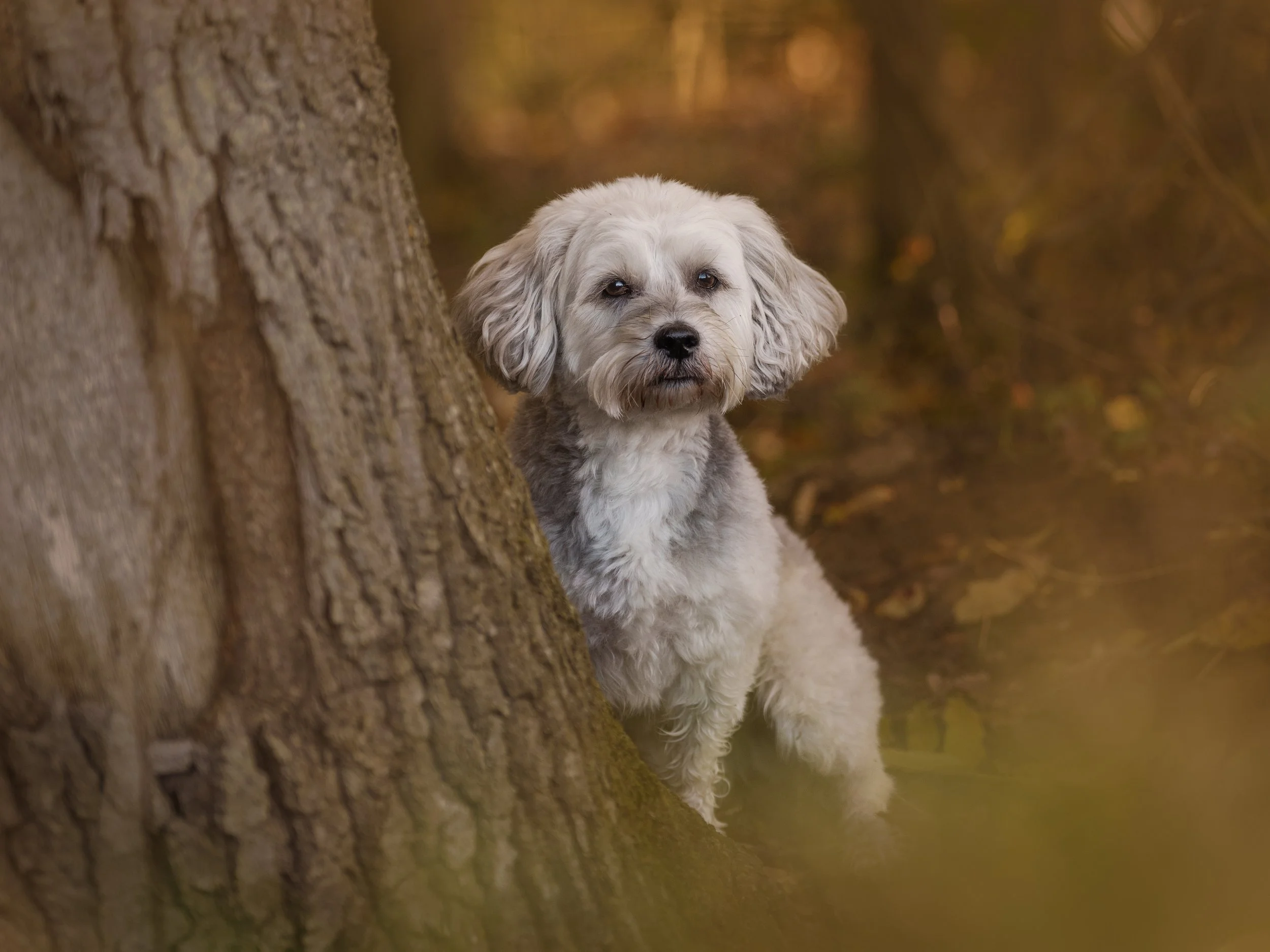
Orientation is the dog’s ability to turn toward their guardian when something changes in the environment. It is not a command — it is a reflexive, conditioned behaviour that says:
“When something happens, look to your person.”
This skill is powerful because it interrupts the dog’s automatic threat‑scanning loop. Research on orienting responses shows that animals who can redirect attention away from a stressor recover more quickly and show reduced fear behaviours (Porges, 2011).
Orientation helps reactive dogs:
Pause before escalating
Seek information rather than react
Feel supported rather than alone
Stay connected during uncertainty
Skill 2: Disengagement — The Skill That Builds Emotional Safety
Disengagement is the dog’s ability to look away from a trigger and return to a neutral or exploratory behaviour.
Disengagement shows that:
The dog has noticed the trigger
Assessed it
Decided it is safe enough to move on
This is a profound behavioural shift. Research on fear learning shows that animals who can voluntarily disengage from a stimulus show lower stress responses and better emotional recovery (Bouton, 2016). This also allows for incremental changes to the difficulty of the environment or intensity of the trigger and works best when initially implemented at a distance.
Disengagement is the opposite of fixation. It is the moment the dog says: “I can handle this.”
Skill 3: Patterning — The Skill That Regulates the Nervous System
Pattern games — predictable, rhythmic sequences of movement — help reactive dogs regulate their nervous system. Predictability can reduce stress. Animals exposed to predictable patterns show lower cortisol levels and fewer stress behaviours (Hennessy et al., 1997).
Patterning helps reactive dogs:
Shift from hypervigilance to rhythm
Reduce scanning
Anchor their body in movement
Access the thinking brain
Recover after triggers
Examples include:
1‑2‑3 Treat
Up/Down
Middle
Simple movement loops
These patterns create a sense of safety through repetition — a powerful tool for dogs who feel overwhelmed by unpredictability.
Why These Skills Come Before Everything Else
These three skills — orientation, disengagement, and patterning — are not optional extras. They are the foundation of behaviour change.
They work because they:
Lower arousal
Increase predictability
Support emotional regulation
Build trust
Create safety
Enable learning
Without these skills, counterconditioning and desensitisation are far less effective. With them, everything becomes easier. Reactive dogs do not need perfection. They need skills that help them feel safe enough to learn.
References
Beerda, B., et al. (1998). Behavioural, saliva cortisol and heart rate responses to different types of stimuli in dogs. Applied Animal Behaviour Science.
Bouton, M.E. (2016). Learning and Behavior: A Contemporary Synthesis.
Hennessy, M.B., et al. (1997). Effects of predictable vs. unpredictable stressors on behaviour and physiology. Physiology & Behavior.
LeDoux, J. (2012). Rethinking the emotional brain. Neuron.
Mills, D.S., et al. (2014). Stress and behavioural disorders in dogs. Journal of Veterinary Behavior.
Porges, S.W. (2011). The Polyvagal Theory.