

5 Calming Enrichment Ideas, That Actually Work
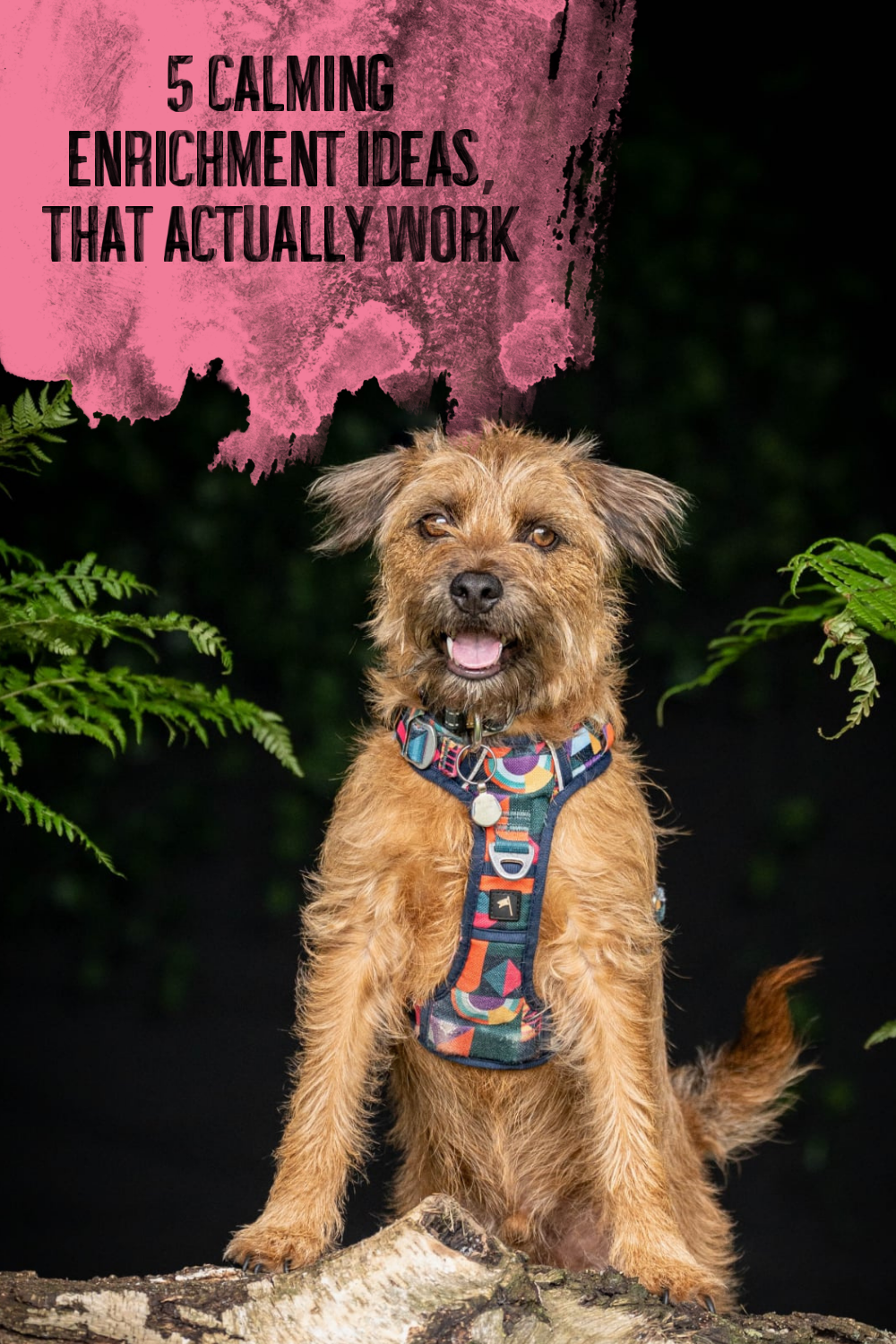
The right activities help regulate the nervous system, reduce arousal, and create emotional stability. Unlike high‑energy games that increase adrenaline, calming enrichment supports the dog’s ability to self‑soothe.
Cognitive and sensory enrichment reduces stress, improves welfare, and promotes positive emotional states in dogs (McGowan et al., 2014; Duranton & Horowitz, 2019). These activities work because they tap into natural behaviours — sniffing, chewing, foraging, exploring — that activate calming neurobiological pathways.
1. Slow Sniff‑Based Foraging
Sniffing is one of the most powerful calming behaviours available to dogs. It activates the parasympathetic nervous system, lowering heart rate and promoting emotional regulation (Horowitz, 2017). Slow sniff‑based foraging — such as scattering treats across a room or hiding them in easy‑to‑reach places — encourages deliberate movement and deep sensory engagement.
Unlike fast‑paced games, slow sniffing reduces arousal rather than increasing it. Dogs become absorbed in the task, shifting from hypervigilance to exploration. For anxious dogs, this shift replaces threat‑scanning with curiosity. Sniff‑based foraging is especially helpful on days when outdoor triggers feel overwhelming, offering a safe, predictable alternative that still meets sensory needs.
2. Lick‑Based Activities for Self‑Soothing
Licking is a natural self‑soothing behaviour. It releases endorphins, reduces tension, and supports emotional regulation. Lick mats, soft spreads (such as xylitol‑free peanut butter or wet food), and frozen fillings create long‑lasting, calming engagement. Repetitive oral behaviours, like licking or gentle chewing, activate neural pathways associated with calmness and stress reduction (Horwitz & Mills, 2012). For anxious dogs, these activities provide a predictable rhythm that helps settle the nervous system. Lick‑based enrichment is particularly effective during noisy periods, transitions, or times when the dog struggles to settle.
3. Slow‑Movement Body Awareness Games
Body awareness activities and slow, deliberate movement increases proprioception, which supports emotional regulation and reduces arousal. Controlled movement has been shown to reduce stress responses in animals by shifting focus from external stimuli to internal bodily awareness (Beerda et al., 1998). These can also support training and the mind-body connection, hopefully reducing injury or strain.
4. Predictable Pattern Games
Pattern games — such as 1‑2‑3 Treat or Up/Down — create predictable, rhythmic sequences that help anxious dogs regulate their nervous system. Predictability is a powerful stress‑reduction tool; animals cope better when they can anticipate what will happen next (Hennessy et al., 1997). Pattern games work because they replace environmental unpredictability with structured interaction. The dog learns that each step leads to a known outcome, reducing cognitive load and supporting emotional stability. These games are especially helpful during transitions, before walks, or after exposure to triggers.
5. Calm Chewing for Emotional Release
Chewing is a natural behaviour that helps dogs release tension. Soft chews, stuffed toys, or safe long‑lasting chews activate calming pathways in the brain and support emotional regulation. Chewing reduces stress hormones and promotes relaxation (Horwitz & Mills, 2012). For anxious dogs, chewing provides an outlet for internal pressure — a way to decompress without increasing arousal. Calm chewing is particularly effective after stressful events, offering a gentle way for the dog to recover.
Why These Activities Work
These enrichment ideas are effective because they rely on calming systems, not adrenaline. They support:
Sensory grounding
Predictable engagement
Slow movement
Emotional regulation
Reduced hypervigilance
Improved stress recovery
References
Beerda, B., et al. (1998). Behavioural, saliva cortisol and heart rate responses to different types of stimuli in dogs. Applied Animal Behaviour Science.
Duranton, C., & Horowitz, A. (2019). Let me sniff! Nosework induces positive judgment bias in pet dogs. Applied Animal Behaviour Science.
Hennessy, M.B., et al. (1997). Effects of predictable vs. unpredictable stressors on behaviour and physiology. Physiology & Behavior.
Horowitz, A. (2017). Smelling themselves: Dogs investigate their own odours longer when modified in an olfactory mirror test. Behavioural Processes.
Horwitz, D., & Mills, D. (2012). BSAVA Manual of Canine and Feline Behavioural Medicine.
McGowan, R.T.S., et al. (2014). Cognitive testing and welfare: effects of cognitive challenge on dogs. Applied Animal Behaviour Science.