

Best Times of Day to Walk a Reactive Dog
For many reactive‑dog guardians, the question isn’t whether to walk their dog — it’s when. The time of day can dramatically shape a reactive dog’s experience: how many triggers they encounter, how stressed they feel, how quickly they recover, and how safe they perceive the world to be.
The timing of a walk intersects with cortisol rhythms, environmental predictability, and sensory load — all factors known to influence canine stress and behaviour. Understanding these patterns allows you to choose walk times that support your dog’s emotional regulation rather than overwhelm it.
How Cortisol Rhythms Influence Reactivity
Cortisol — the body’s primary stress hormone — follows a natural daily rhythm in dogs. While the exact pattern varies between individuals, cortisol typically fluctuates throughout the day in response to environmental conditions, human interaction, and internal regulation processes. Cortisol plays a central role in how dogs cope with stress, influencing both behaviour and physiological stability (Mârza et al., 2024).
For reactive dogs, this matters because:
Dogs with slower cortisol recovery after stress tend to show more undesirable behaviours in daily life, including heightened reactivity (Lensen et al., 2019).
Environmental stressors — noise, crowding, unpredictability — can elevate cortisol levels, making reactive responses more likely (Mârza et al., 2024).
This means that the “best time” to walk a reactive dog is often when their internal stress system is least challenged by the external environment.
Early Mornings
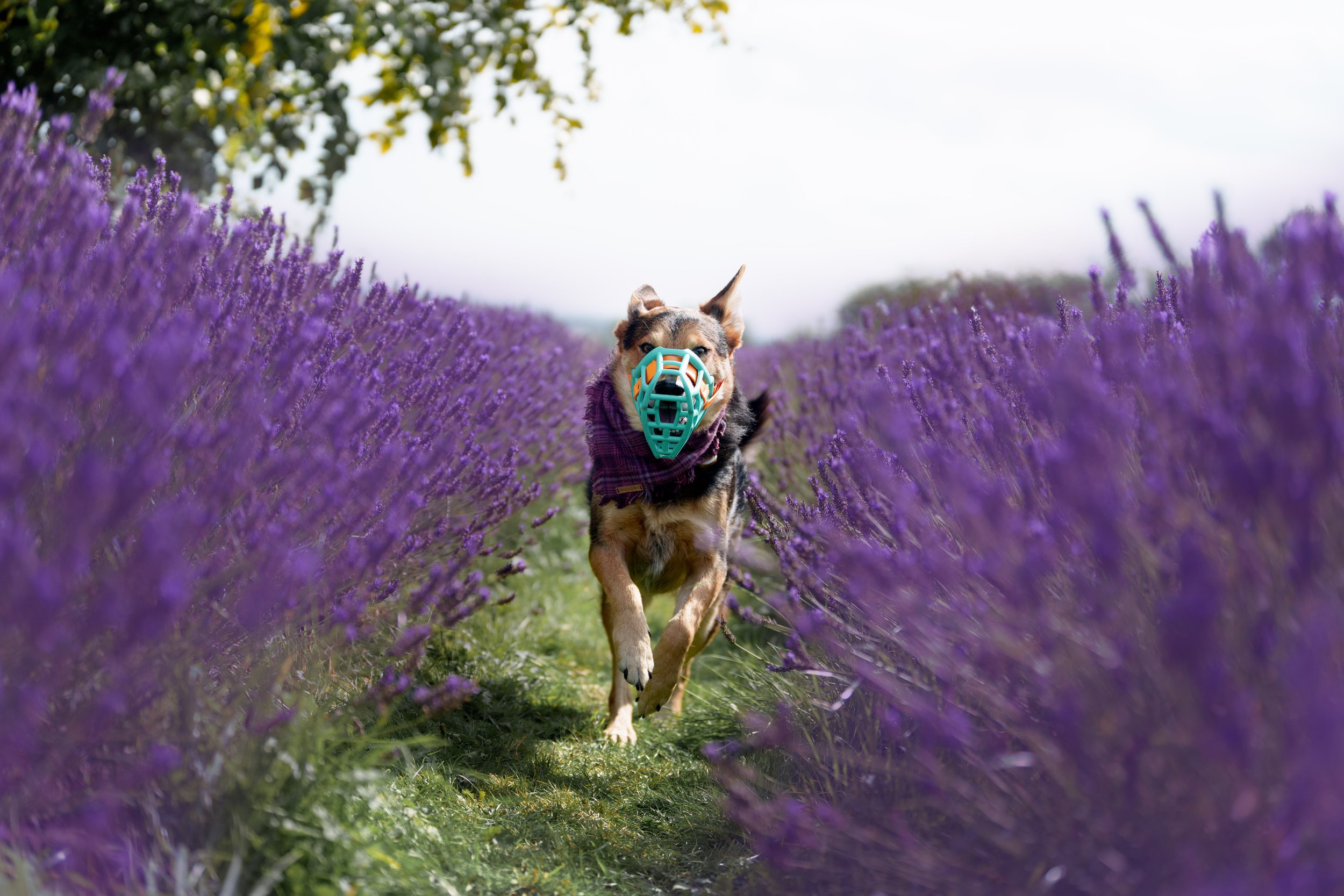
Many reactive‑dog owners instinctively gravitate toward early‑morning walks — and for good reason. The world is quieter, and the sensory landscape less intense.
Early mornings typically offer:
Lower environmental density (fewer dogs, fewer people, fewer vehicles)
Reduced sensory load, which supports emotional regulation
More predictable patterns, which some reactive dogs may prefer
Because environmental factors strongly influence cortisol levels (Mârza et al., 2024), calmer surroundings help keep the dog’s stress system stable. A dog who begins the day with a manageable walk is also less likely to accumulate stress that carries into later experiences.
Late Evenings
For some dogs, late evenings provide a similar sense of relief. As the day winds down, the environment becomes quieter again, and reactive dogs often find it easier to process the world.
Evening walks can be especially helpful for dogs who:
Struggle with morning energy or stiffness
Live in neighbourhoods with predictable evening quiet periods
Need more time to decompress after daytime stressors
Because cortisol levels are influenced by environmental conditions such as noise and human activity (Mârza et al., 2024), the calmer evening atmosphere can support better emotional regulation.
Why Midday Is Often the Most Challenging Time
Midday tends to be the busiest, noisiest, and most unpredictable period of the day. For reactive dogs, this can mean:
More dogs being walked
More children playing
More traffic and movement
More unexpected triggers
Sudden triggers are particularly difficult for reactive dogs because they activate rapid neuroendocrine and cardiovascular responses associated with acute stress (Gobbo & Zupan Šemrov, 2021).
This physiological activation can make even a well‑managed dog feel overwhelmed. For many reactive dogs, midday walks are not impossible, but they may require careful planning, generous distance, and a strong understanding of your dog’s threshold. Rather than jumping straight in at the deep end, it may support your training to think about when you decide to walk your dog.
Weather, Light, and Sensory Load
Time of day also interacts with environmental conditions:
Bright sunlight can increase visual stimulation
Heat can elevate physiological stress
Low light can reduce visibility and increase uncertainty
Windcan carry scents and sounds unpredictably
Because cortisol is sensitive to environmental change (Mârza et al., 2024), these factors can influence how reactive a dog may be at different times of day. Some dogs cope better in low‑light conditions where they are less likely to see further off triggers; others find shadows and movement more challenging, and function better with greater visibility.. Observing your dog’s individual responses is key.
Why There Is No Universal “Best Time” — Only the Best Time for Your Dog
While early mornings and late evenings are often calmer, the ideal time depends on:
Your dog’s coping style
Your neighbourhood’s activity patterns
Your dog’s recovery rate after stress
Your dog’s sensory sensitivities
Your own emotional comfort
Dogs with slower cortisol recovery — a trait linked to more undesirable behaviours (Lensen et al., 2019) — may need longer quiet periods between walks. Dogs who become overwhelmed quickly may benefit from shorter, more frequent walks during low‑activity windows.
The goal is not to avoid the world entirely, but to meet your dog where they are, supporting their nervous system rather than overwhelming it. You can then begin to build in additional challenge to support their development and resilience.
A Walk That Supports Emotional Safety
Choosing the right time of day is one of the simplest, most powerful ways to support a reactive dog. When the environment is calmer, your dog’s stress system remains more stable, their behaviour becomes more predictable, and their capacity for learning increases.
A well‑timed walk is not just easier, it is kinder. It honours your dog’s emotional reality and gives them the best chance to succeed.
References
Lensen, R.C.M.M., Moons, C.P.H., & Diederich, C. (2019). Physiological stress reactivity and recovery related to behavioral traits in dogs (Canis familiaris). PLoS ONE, 14(9).
Mârza, S.M., et al. (2024). Behavioral, Physiological, and Pathological Approaches of Cortisol in Dogs. Animals, 14(23).
Gobbo, E., & Zupan Šemrov, M. (2021). Neuroendocrine and Cardiovascular Activation During Aggressive Reactivity in Dogs. Frontiers in Veterinary Science, 8.