

5 Things You Can Change This Week to Support Your Dog’s Reactivity

If your dog is reactive, you do not need to fix everything at once. Small changes can make a real difference, especially when they reduce stress and prevent repeated blow-ups.
1. Change the walking route
Choose quieter routes, calmer times of day, and fewer narrow paths where surprise encounters are likely. This reduces the frequency and intensity of triggers, which directly lowers stress levels.
Environmental management is one of the most effective and immediate ways to support behaviour change because it prevents repeated exposure to situations the dog cannot yet handle (Overall, 2013).
Even small adjustments—like crossing the road earlier or avoiding bottleneck areas—can significantly change how a walk feels for your dog. It’s important to use this as a management tool that supports your training, rather than a solution.
2. Increase distance from triggers
Distance is one of the most powerful tools you have. Increasing distance reduces the intensity of the stimulus and allows the dog to remain under threshold.
At a greater distance, your dog is more able to process information, respond to cues, and recover quickly. This creates opportunities for learning rather than reaction.
Over time, working at a safe distance can be used to gradually change the dog’s emotional response through desensitisation and counterconditioning., and engagement games.
3. Stop forcing greetings
Not every dog needs to say hello. Forcing interactions can increase pressure, especially for dogs who are fearful or easily overwhelmed.
For frustrated dogs, removing greetings can also reduce the expectation that every dog or person is an opportunity for interaction, which helps lower arousal over time.
Allowing the dog to observe without interacting can be a powerful way to build neutrality and reduce emotional intensity.
4. Reward calm check-ins
Notice and reward the behaviour you want more of, such as your dog looking back at you, disengaging from a trigger, or choosing to stay relaxed.
These small behaviours are often overlooked, but they are critical. Reinforcement strengthens them, making them more likely to occur in the future (Hiby et al., 2004).
This also helps shift the dog’s focus from the environment back to the handler, building a more cooperative and responsive pattern.
5. Track what happens
Keep a simple record of what your dog reacted to, how far away it was, and what time of day it happened.
Patterns often emerge over time. You may notice that your dog reacts more when tired, in certain locations, or after multiple exposures in a short period.
This information allows you to make more informed decisions and avoid situations that are consistently difficult.
Why these changes help
These changes work because they reduce the number of times your dog rehearses the reactive response. Behaviour that is repeated becomes more automatic and more resistant to change (Bouton, 2007).
They also reduce overall stress load. Lower stress improves emotional regulation, increases learning capacity, and shortens recovery time after exposure to triggers.
Importantly, these changes are sustainable. They do not rely on constant correction or control, but on creating conditions where the dog can succeed.
REACTIVE DOG PHOTOGRAPHY
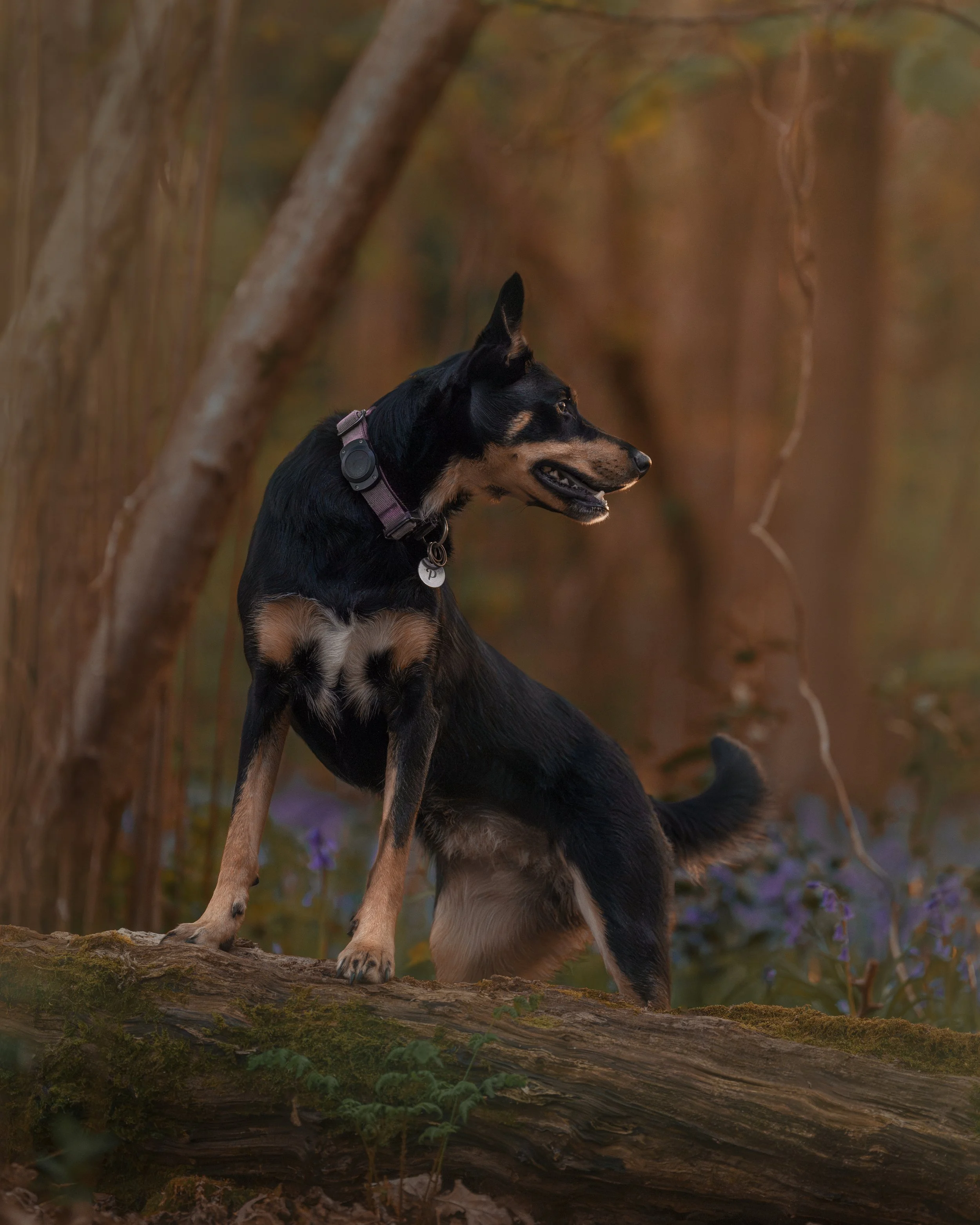
The same principles apply to a reactive dog photography experiences. Quiet locations, appropriate distance, and a flexible, dog-led pace reduce stress and allow more natural behaviour.
Planning ahead—just like with walks—can make the difference between a stressful experience and a successful one, and these are things your dog photographer should consider and discuss when you enquire,
FAQs
What is the fastest change I can make?
Increasing distance from triggers is often the quickest and most effective way to reduce stress.
Do I need to stop all walks?
Not necessarily. Many dogs benefit more from fewer, calmer, better-managed walks than from complete avoidance.
Is one week enough to fix reactivity?
No, but one week is enough to begin thinking about stress, improving handling, and building better patterns.
References
Bouton, M.E. (2007) Learning and Behavior: A Contemporary Synthesis. Sunderland, MA: Sinauer Associates.
Hiby, E.F., Rooney, N.J. and Bradshaw, J.W.S. (2004) ‘Dog training methods: their use, effectiveness and interaction with behaviour and welfare’, Animal Welfare, 13(1), pp. 63–69.
Overall, K.L. (2013) Manual of Clinical Behavioral Medicine for Dogs and Cats. St. Louis: Elsevier.