

Why Your Dog Is Different at Home vs Outside: Understanding Environmental Sensitivity in Reactive Dogs
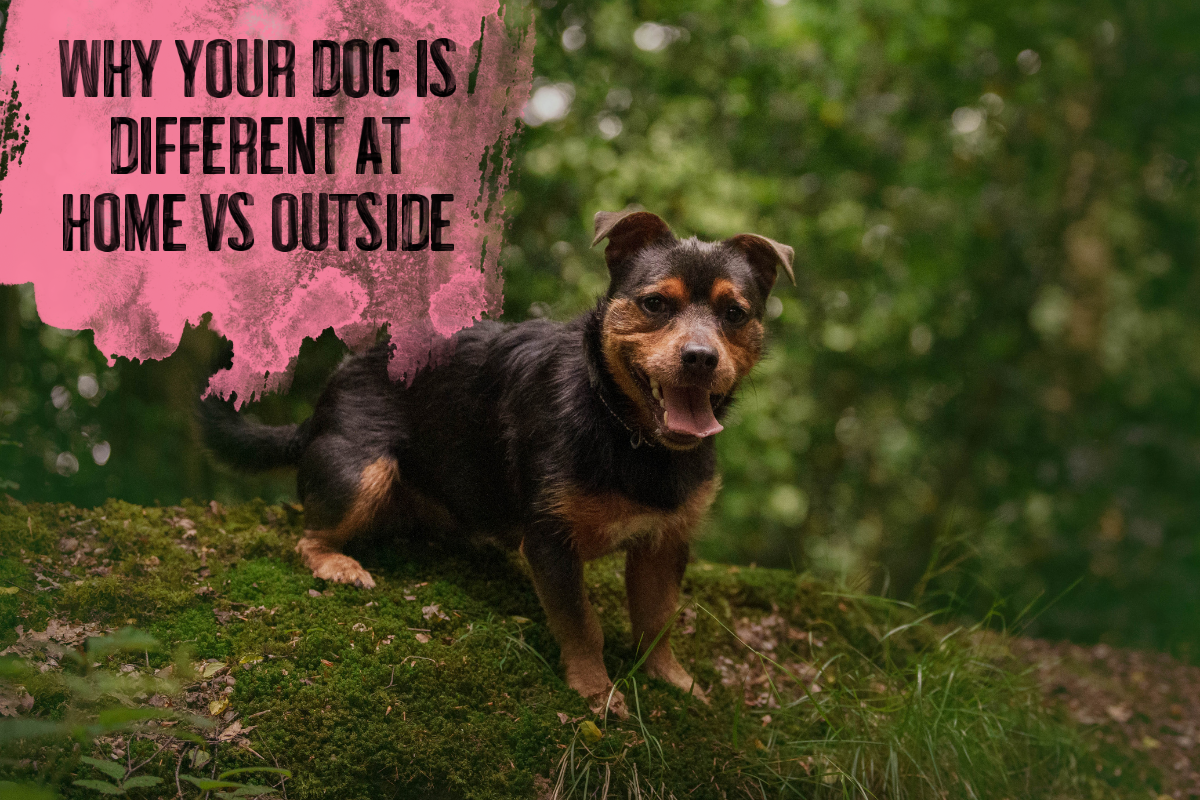
Many guardians describe their reactive dog as “two different dogs”: calm, affectionate, and regulated at home, yet hyper‑vigilant, overwhelmed, or explosive outside. This contrast can feel confusing or discouraging, especially when progress at home doesn’t seem to translate to the outside world. But this difference is not inconsistency. Dogs behave differently in different environments because their nervous system responds to sensory load, unpredictability, social pressure, and perceived safety.
Understanding why your dog changes so dramatically between home and outside is one of the most important steps in reactive dog work. When guardians understand the science behind environmental sensitivity, they stop blaming themselves, stop blaming their dog, and start supporting the nervous system instead of fighting it.
Home: The Low‑Load, High‑Safety Environment
Home is the most predictable environment your dog has. Predictability reduces stress responses and increases emotional stability (Hennessy et al., 1997). At home, your dog knows the layout, the sounds, the routines, the smells, and the social dynamics, which may allow them to cope with unpredictable or intense triggers more effectively.
This predictability creates a low sensory load. Sensory load refers to the amount of information the nervous system must process at once. At home, sensory input is limited and familiar. The dog can rest, decompress, and regulate without being pulled into vigilance. Dogs adjust their emotional responses based on environmental familiarity, with familiar environments producing calmer, more regulated behaviour (Gácsi et al., 2001). Home also offers greater agency — the ability to choose where to rest, when to move, and how to respond. Agency reduces fear responses and increases emotional resilience (DePorter et al., 2020). When dogs have control over their environment, their threshold rises. They can tolerate more without tipping into reactivity.
This is why your dog may appear “perfect” at home. Their nervous system is not being challenged. Their threshold is high. Their emotional load is low. Their sense of safety is intact.
Outside: The High‑Load, High‑Demand Environment
Outside is the opposite of home. It is unpredictable, fast‑moving, socially complex, and sensory‑dense. Dogs exposed to unpredictable stimuli show heightened vigilance, increased cortisol, and slower recovery (Beerda et al., 1998; Beerda et al., 1999). The outside world is full of unpredictable stimuli: joggers appearing from behind hedges, dogs emerging around corners, cars accelerating suddenly, bikes passing silently, children shouting, doors slamming, and unfamiliar people approaching. Every one of these stimuli demands rapid processing. The dog must assess movement, direction, speed, proximity, intention, and threat level — often within seconds. This level of sensory demand overwhelms many reactive dogs. High sensory environments increase reactivity and reduce coping capacity (Palestrini et al., 2010).
Outside also removes some agency. The dog cannot choose where to go, how far to move, or when to retreat in certain environments. They are attached to a lead, confined by pavements, and guided by a guardian who may be stressed themselves. Loss of agency increases fear responses and reduces emotional resilience (Hekman et al., 2012). Threshold drops quickly outside because the nervous system is already activated. A dog who is calm at home may be operating near threshold the moment they step outside, simply because the sensory load is so high.
The Role of Stress Physiology
Stress physiology plays a central role in environmental sensitivity. When dogs encounter unpredictable or overwhelming stimuli, their sympathetic nervous system activates. Heart rate increases, muscles tense, breathing changes, and cortisol rises. This physiological shift prepares the dog for action — but it also reduces cognitive flexibility, making it harder for the dog to think, learn, or respond calmly. Social pressure and environmental unpredictability increase cortisol and reduce emotional resilience (Dickerson & Kemeny, 2004). Outside environments contain both. Guardians often feel watched, judged, or rushed. Dogs detect human stress through scent and behaviour (D’Aniello et al., 2018), and human stress influences canine behaviour (Cobb et al., 2021). When both dog and guardian are stressed, reactivity becomes far more likely.
Why Training Transfers Poorly from Home to Outside
Guardians often feel frustrated when behaviours that are reliable at home fall apart outside. Dogs do not generalise well across environments, and this is a skill to be worked on with your dog. A behaviour learned in a low‑load environment does not automatically transfer to a high‑load environment.
This is consistent with research on context‑dependent learning, which shows that dogs respond differently to cues depending on environmental familiarity, sensory load, and emotional state (Gácsi et al., 2001). A cue that feels easy at home may feel impossible outside because the dog’s nervous system is overwhelmed. Training does not fail outside because the dog is stubborn. It fails because the dog’s cognitive bandwidth is consumed by environmental processing.
Why Your Dog’s Triggers Feel Bigger Outside
Triggers feel bigger outside because the dog’s baseline arousal is already elevated. A dog who is calm at home may begin a walk at a higher arousal level simply because the environment is unpredictable. When baseline arousal is high, threshold is low. This means even mild triggers can produce intense reactions.
This phenomenon is known as trigger stacking — the accumulation of stressors that reduce threshold and increase reactivity (Horwitz & Mills, 2009). Outside environments stack triggers constantly: noises, movement, smells, social pressure, weather, and unexpected encounters. Even if each trigger is small, the cumulative effect is significant. This is why your dog may react to something outside that they would ignore at home. Their nervous system is already working hard.
Why Guardians Feel Different Outside Too
Guardians often describe feeling more tense, embarrassed, or pressured outside. This emotional shift matters. Dogs detect human stress through scent and behaviour (D’Aniello et al., 2018). Human stress influences canine behaviour (Cobb et al., 2021). When guardians feel watched, judged, or rushed, their dog’s threshold drops further. Outside is not just harder for the dog. It is harder for the guardian.
How to Support Your Dog in Both Environments
Supporting your dog begins with understanding that home and outside are not equivalent. They are different emotional worlds. The goal is not to make your dog behave the same in both environments. The goal is to support the nervous system in each environment according to its demands, for your dog to succeed. At home, support looks like rest, decompression, predictable routines, training and cooperative care. Outside, support looks like environmental awareness, early distance‑creation, calm advocacy, and realistic expectations.
Your Dog Is Not Inconsistent — The Environments Are
Your dog is not being dramatic, stubborn, or unpredictable. Your dog is responding to the emotional reality of two very different environments. At home, the nervous system has more opportunity to rest. Outside, there may be greater challenges, stressors and stacking. When guardians understand this difference, they stop expecting home‑level behaviour in outside‑level environments befpre their dog is ready to offer them. They begin supporting the dog’s nervous system instead of fighting it. And the dog begins to feel understood, protected, and safe.
References
Beerda, B., et al. (1998). Behavioural, saliva cortisol and heart rate responses to different types of stimuli in dogs.
Beerda, B., et al. (1999). Chronic stress in dogs subjected to social and environmental deprivation.
Cobb, M., et al. (2021). Stress in dog owners and its relationship to canine behaviour.
D’Aniello, B., et al. (2018). Interspecies transmission of emotional information via chemosignals.
DePorter, T., et al. (2020). Cooperative care and low-stress handling.
Dickerson, S., & Kemeny, M. (2004). Acute stressors and cortisol responses.
Gácsi, M., et al. (2001). Context-dependent behaviour in dogs.
Hekman, J., et al. (2012). Cortisol responses in shelter dogs during routine procedures.
Hennessy, M., et al. (1997). Predictable vs unpredictable stressors.
Hennessy, M., et al. (2020). Stress, fear, and anxiety in dogs.
Horwitz, D., & Mills, D. (2009). Behavioural medicine in dogs and cats.
Palestrini, C., et al. (2010). Noise phobia and physiological stress.