

Understanding Anxiety in Dogs: Symptoms, Causes, and Support
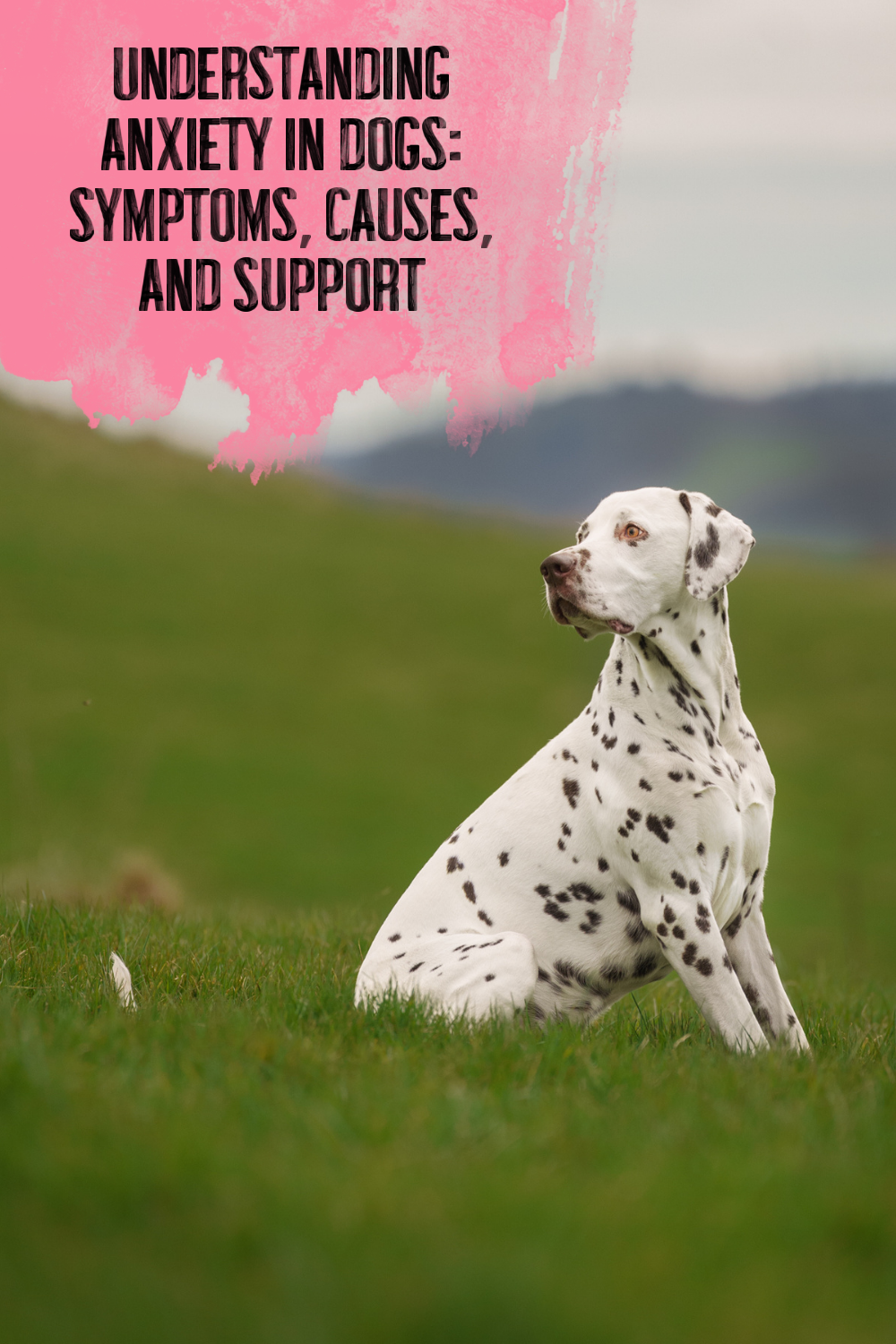
Anxiety in dogs is frequently misunderstood, often framed as disobedience, stubbornness, or a lack of training. Yet anxiety is not a behavioural choice; it is a neurobiological and emotional state, shaped by the dog’s genetics, early experiences, environment, and individual temperament. When a dog is anxious, they are not “acting out” they are expressing distress through the behavioural language available to them.
Understanding anxiety requires a shift from behaviour‑centric interpretations to an appreciation of the underlying emotional processes. Anxiety is not simply fear. It is a persistent anticipation of threat, a state in which the dog’s nervous system remains on alert even in the absence of immediate danger. This heightened vigilance influences how the dog perceives the world, how they respond to everyday events, and how they recover from stress. Anticipatory anxiety activates similar neural pathways to acute fear, particularly within the amygdala and associated limbic structures (LeDoux, 2012), meaning anxious dogs live in a state of chronic emotional readiness.
How Anxiety Shows Up in Dogs
Anxiety rarely presents as a single, dramatic behaviour. Instead, it emerges as a constellation of subtle signals that accumulate over time. Many anxious dogs display behaviours that guardians initially dismiss as quirks: pacing in the evening, difficulty settling, clinginess, sudden barking at minor noises, or restlessness during routine transitions. These behaviours are often early indicators of a nervous system struggling to regulate itself.
Dogs express stress through behavioural, physiological, and postural changes (Beerda et al., 1998). Hypervigilance is one of the most common signs. An anxious dog may scan the environment repeatedly, ears flicking, head turning sharply, muscles tense. The dog attempts to predict and control the environment to avoid being startled or overwhelmed. Hypervigilance has been documented as a core behavioural marker of chronic stress in companion animals (Hennessy et al., 2020), reflecting a system that is persistently primed for threat detection.
Other dogs express anxiety through withdrawal. They may retreat to quiet spaces, avoid interaction, or become unusually still. Stillness is often misinterpreted as calmness, yet in anxious dogs it can reflect a freeze response — a state in which movement is suppressed because movement feels unsafe. Freeze responses are well‑documented across mammalian species and are associated with parasympathetic “shutdown” mechanisms designed to reduce detection by predators (Koch, 1999).
Some anxious dogs vocalise: whining, barking, or howling in response to minor stimuli. Others show displacement behaviours such as yawning, lip‑licking, or sudden scratching. These behaviours are not random; they are attempts to self‑regulate when the dog’s emotional state becomes difficult to manage. Displacement behaviours have been identified as reliable indicators of internal conflict and emotional overload (Horwitz & Mills, 2012).
Anxiety also affects basic functions. Dogs may struggle to sleep deeply, eat consistently, or relax in familiar environments. They may become more sensitive to noise, movement, or changes in routine. These shifts reflect the pervasive nature of anxiety — it infiltrates every aspect of the dog’s daily life. Chronic stress has been shown to impair sleep quality and increase irritability in dogs (Kostarczyk & Fonberg, 1982), further reducing their ability to cope with everyday stimuli.
Where Anxiety Comes From
Anxiety is rarely caused by a single factor. Instead, it emerges from an interplay of genetics, early experiences, environment, pain, and learning history.
Genetics play a significant role. Certain breeds and lines show higher sensitivity to noise, novelty, and social stressors (Storengen & Lingaas, 2015). This sensitivity is not a flaw; it is a temperament trait. Dogs bred for vigilance, responsiveness, or close human bonding may be more prone to anxiety because their nervous systems are naturally more reactive to environmental change. Studies on canine personality highlight that traits such as neuroticism and fearfulness have heritable components (Tiira & Lohi, 2015).
Early experiences shape how the dog interprets the world. Puppies exposed to unpredictable environments, insufficient or inappropriate socialisation, or traumatic events may develop heightened sensitivity to stress later in life. Early fear experiences create strong emotional memories that persist into adulthood (Overall, 2013). The concept of “critical periods” in puppy development is well‑established, with inadequate exposure during these windows linked to increased anxiety (Freedman et al., 1961).
Pain is a major but often overlooked contributor. Dogs experiencing chronic discomfort — from musculoskeletal issues, gastrointestinal problems, or undiagnosed medical conditions — may become more anxious because pain reduces their ability to cope with everyday stimuli. Pain and anxiety share overlapping neural pathways, particularly within the limbic system (Mills et al., 2020). This means that untreated pain can amplify fear responses and reduce emotional resilience.
Environment also matters. Busy households, frequent visitors, loud neighbourhoods, or unpredictable routines can elevate stress levels. Research shows that animals exposed to unpredictable environments display heightened vigilance and slower stress recovery (Hennessy et al., 1997). For anxious dogs, unpredictability is not a minor inconvenience; it is a threat. Environmental noise, in particular, has been shown to increase cortisol levels and reduce behavioural stability (Coppola et al., 2006).
Learning history shapes anxiety. Dogs who have experienced frightening events — fireworks, dog-dog conflict, sudden noises, harsh training — may develop anticipatory anxiety. The dog begins to expect danger even when none is present. This expectation becomes the emotional baseline from which all behaviour emerges. Fear conditioning research shows that once a fear association is formed, it can be easily reactivated even after successful behaviour modification (LeDoux, 2012).
Why Anxiety Feels Different From Reactivity
Although anxiety and reactivity often coexist, they are not the same. Reactivity is a rapid, reflexive response to a perceived threat. Anxiety is a persistent emotional state that influences how the dog perceives the world even in the absence of triggers.
An anxious dog may struggle in quiet environments, reacting to subtle sounds or minor changes. They may show fear without an obvious stimulus, or become overwhelmed by transitions that other dogs navigate easily. Their threshold is lower, their recovery slower, and their emotional resilience more fragile. Studies on canine emotionality show that anxious dogs exhibit reduced cognitive flexibility, making it harder for them to adapt to change (McGowan et al., 2014).
Understanding this distinction matters because anxious dogs require predictability, gentle exposure, and emotional safety — not obedience drills or pressure‑based training. Anxiety cannot be trained out; it must be supported.
How Anxiety Shapes Daily Life
Anxiety affects every aspect of a dog’s functioning. Sleep becomes lighter and more fragmented. Appetite fluctuates. Social behaviour becomes inconsistent — some anxious dogs cling to their guardians, while others withdraw. Learning capacity decreases because stress inhibits cognitive processing (McGowan et al., 2014). Stress recovery slows, meaning the dog carries tension from one event into the next.
An anxious dog may struggle with novelty, separation, noise, visitors, or busy walks. Their world feels unpredictable, and unpredictability is the enemy of emotional safety. Even small changes — a moved piece of furniture, a new sound, a different walking route — can feel overwhelming.
Supporting an Anxious Dog
Supporting an anxious dog is not about eliminating anxiety entirely. It is about reducing stress load, increasing predictability, and building emotional resilience.
Predictability is one of the most powerful tools. Animals cope better when they can anticipate what will happen next (Hennessy et al., 1997). Predictable routines, consistent interactions, and stable environments help anxious dogs feel safe enough to relax.
Choice and control are equally important. Dogs who can choose distance, pace, and engagement show better emotional regulation and reduced fear responses (Forkman et al., 2007). Allowing the dog to opt out of interactions or move away from stimuli is not indulgence or pandering to them.
Safe environments matter. Noise reduction, calm spaces, and stable social dynamics help anxious dogs decompress. Behaviour change must be gentle, using counterconditioning and desensitisation to reshape emotional responses without overwhelming the dog.
Pain management is essential. Addressing discomfort can dramatically reduce anxiety because pain and fear share overlapping neural pathways (Mills et al., 2020).
Finally, guardian emotional regulation plays a role. Dogs detect human stress through scent and behaviour (D’Aniello et al., 2018). This does not mean guardians cause anxiety — but it does mean co‑regulation is real. Calmness is contagious.
Anxiety is not a flaw. It is a state — one that can be supported, softened, and reshaped with compassion and science. Your dog is not failing. Your dog is communicating. And with the right support, anxious dogs can thrive.
ReferenceS
Beerda, B., et al. (1998). Behavioural, saliva cortisol and heart rate responses to different types of stimuli in dogs. Applied Animal Behaviour Science.
Bouton, M.E. (2016). Learning and Behavior: A Contemporary Synthesis.
Coppola, C.L., et al. (2006). Noise exposure and welfare in kenneled dogs. Journal of Applied Animal Welfare Science.
D’Aniello, B., et al. (2018). Interspecies transmission of emotional information via chemosignals. Animal Cognition.
Freedman, D.G., et al. (1961). Critical periods in the social development of dogs. Science.
Forkman, B., et al. (2007). Fear and coping in animals. Applied Animal Behaviour Science.
Hennessy, M.B., et al. (1997). Effects of predictable vs. unpredictable stressors on behaviour and physiology. Physiology & Behavior.
Hennessy, M.B., et al. (2020). Stress, fear, and anxiety in dogs: neurobiology and behaviour. Journal of Veterinary Behavior.
Horwitz, D., & Mills, D. (2012). BSAVA Manual of Canine and Feline Behavioural Medicine.
Koch, M. (1999). The neurobiology of startle. Progress in Neurobiology.
Kostarczyk, E., & Fonberg, E. (1982). Effects of chronic stress on sleep in dogs. Physiology & Behavior.
LeDoux, J. (2012). Rethinking the emotional brain. Neuron.
McGowan, R.T.S., et al. (2014). Cognitive testing and welfare: effects of cognitive challenge on dogs. Applied Animal Behaviour Science.
Mills, D.S., et al. (2020). Pain and problem behaviour in cats and dogs. Journal of Veterinary Behavior.
Overall, K. (2013). Manual of Clinical Behavioral Medicine for Dogs and Cats.
Storengen, L.M., & Lingaas, F. (2015). Noise sensitivity in 17 dog breeds. Applied Animal Behaviour Science.
Tiira, K., & Lohi, H. (2015). Genetic and environmental factors in canine anxiety. Applied Animal Behaviour Science.