

The Loneliness of Reactive Dog Ownership: When Your World Quietly Shrinks
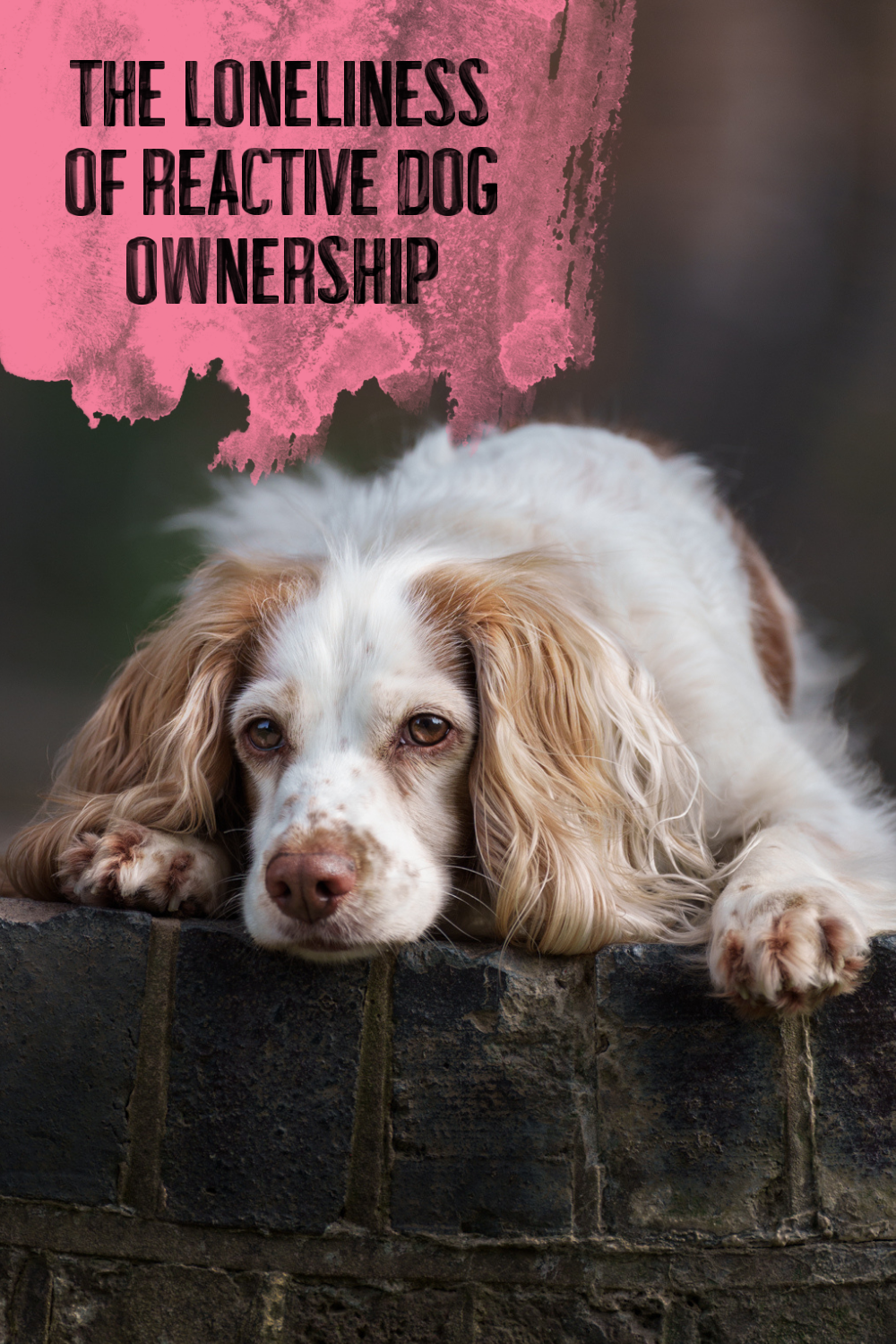
The Loneliness of Reactive Dog Ownership
Loneliness is one of the most unspoken experiences of reactive dog ownership. It doesn’t arrive suddenly. It builds slowly, quietly, and often invisibly — accumulating through cancelled plans, avoided environments, tense walks, and the gradual realisation that your life no longer looks like the lives of other dog guardians.
Reactive dog guardians often describe a sense of shrinking: their walking routes shrink, their social opportunities shrink, their confidence shrinks, and their world becomes smaller in ways that feel both protective and isolating. This loneliness is not a personal failing. It is a predictable emotional response to living with a dog whose nervous system requires careful management, predictable environments, and thoughtful boundaries.
Why Loneliness Emerges in Reactive Dog Life
Loneliness in reactive dog guardianship is shaped by several overlapping psychological and social factors. Each contributes to a sense of separation from the wider dog‑owning world.
Attachment and Emotional Investment
Reactive dog guardians often have strong attachment bonds with their dogs. This attachment increases empathy, emotional resonance, and co‑regulation — meaning the guardian’s emotional state is closely tied to the dog’s wellbeing. When your dog struggles, you feel it. When your dog is overwhelmed, you carry it. When your dog cannot cope in certain environments, you avoid them. This protective instinct is natural, but it can gradually reduce social opportunities, creating isolation.
Environmental Avoidance and Restricted Movement
Reactive dogs often need quiet routes, predictable environments, and controlled exposure. Guardians therefore avoid busy parks, popular walking trails, dog‑friendly cafés, and social gatherings. Over time, these avoidances become routine. Dogs and humans benefit from predictable environments (Hennessy et al., 1997), but predictability often means solitude — walking at off‑peak times, choosing empty streets, or avoiding places where other dogs might appear. This environmental restriction is one of the strongest contributors to loneliness.
Social Pressure and Misunderstanding
Reactive dog guardians frequently experience judgement, unsolicited advice, or criticism from other dog owners. Social evaluation increases cortisol and reduces emotional resilience (Dickerson & Kemeny, 2004). When guardians feel judged, they often withdraw to avoid further negative encounters. This withdrawal is protective, but it also reduces social contact. Over time, guardians may feel disconnected from the wider dog‑owning community, especially when others do not understand reactivity or minimise its impact.
Caregiver Burden and Emotional Exhaustion
Supporting a reactive dog requires emotional labour — regulating your own emotions while managing your dog’s dysregulated nervous system. Emotional labour is strongly associated with burnout and social withdrawal (Hochschild, 1983; Christiansen et al., 2016). When guardians feel emotionally exhausted, they often lack the capacity for social engagement. Loneliness becomes both a consequence and a coping strategy.
Identity Shift
Reactive dog guardians often describe an identity shift: they become “the person with the reactive dog.” This identity can feel isolating, especially when surrounded by people whose dogs cope easily. Social comparison increases emotional distance, making guardians feel “othered” even in familiar environments.
The Emotional Experience of Loneliness
Loneliness in reactive dog life is not simply the absence of people. It is the presence of emotional weight — a sense of being unseen, misunderstood, or unsupported. Guardians often describe:
Feeling isolated during walks
Avoiding conversations with other dog owners
Feeling misunderstood by friends or family
Missing out on social dog activities
Feeling responsible for protecting others from their dog’s behaviour
Feeling responsible for protecting their dog from others
Feeling like their world has become smaller
These experiences are not imagined. They are documented in research on caregiver burden, social stress, and attachment‑based caregiving (Christiansen et al., 2016; Hostinar et al., 2014).

Why Loneliness Feels So Heavy
Loneliness feels heavy because it interacts with attachment, identity, and emotional labour. Guardians are not simply alone; they are alone with responsibility. They are alone with vigilance. They are alone with the weight of protecting a sensitive nervous system.
This emotional load is intensified by:
Hypervigilance during walks
Anticipatory anxiety before leaving the house
Fear of judgement
Fear of unexpected encounters
Slow progress
Emotional exhaustion
Loneliness becomes intertwined with stress, making it harder to recover and harder to seek connection.
How to Reduce Loneliness Without Compromising Your Dog’s Needs
Reducing loneliness does not require abandoning boundaries or exposing your dog to overwhelming environments. It requires intentional, compassionate strategies that support both guardian and dog.
Social buffering — support from people who understand — reduces stress and increases resilience (Hostinar et al., 2014). Reactive dog communities provide validation, provide support, and emotional safety. They reduce shame and create connection without requiring you to compromise your dog’s needs.
Predictability reduces stress responses in both humans and dogs (Hennessy et al., 1997). Choose quiet, familiar places where you can meet trusted people without overwhelming your dog.
Parallel walks, quiet meet‑ups, or shared decompression activities allow guardians to connect without forcing dogs into stressful interactions.Or find community in activities beyond your dog if this feels too stressful.
Self‑compassion reduces shame and emotional exhaustion (Neff, 2011). Loneliness is not a personal failure. It is a natural response to a demanding role.
Boundaries do not isolate you. They create conditions where relationships can thrive without compromising your dog’s wellbeing.
References
Beerda, B., et al. (1998). Behavioural, saliva cortisol and heart rate responses to different types of stimuli in dogs. Applied Animal Behaviour Science.
Christiansen, S.B., et al. (2016). The burden of caring for animals with behavioural problems. Veterinary Record.
Dickerson, S.S., & Kemeny, M.E. (2004). Acute stressors and cortisol responses: a theoretical integration. Psychological Bulletin.
Hennessy, M.B., et al. (1997). Effects of predictable vs. unpredictable stressors on behaviour and physiology. Physiology & Behavior.
Hennessy, M.B., et al. (2020). Stress, fear, and anxiety in dogs: neurobiology and behaviour. Journal of Veterinary Behavior.
Hochschild, A.R. (1983). The Managed Heart: Commercialization of Human Feeling.
Hostinar, C.E., et al. (2014). Social buffering of stress. Psychological Science.
Neff, K. (2011). Self‑Compassion: The Proven Power of Being Kind to Yourself.
Overall, K. (2013). Manual of Clinical Behavioral Medicine for Dogs and Cats.
Topál, J., et al. (1998). Attachment behaviour in dogs. Journal of Comparative Psychology.